
Miotas, school collection project by Anne XIRADAKIS & Armand BEHAR
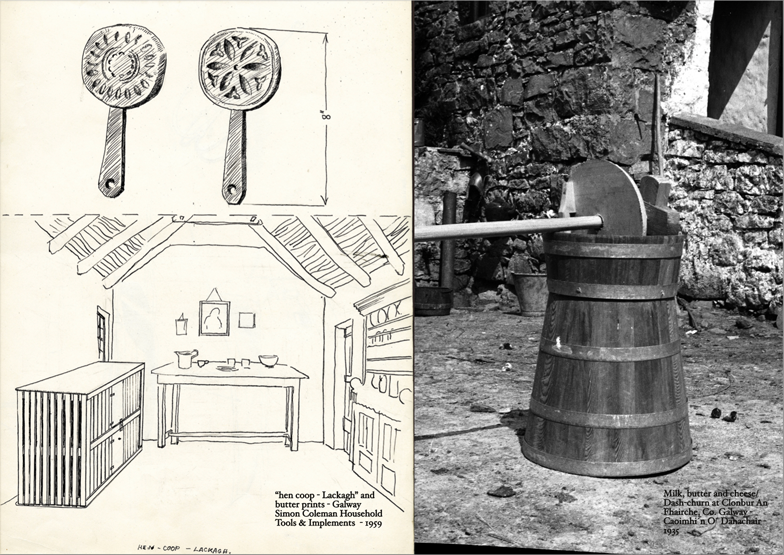
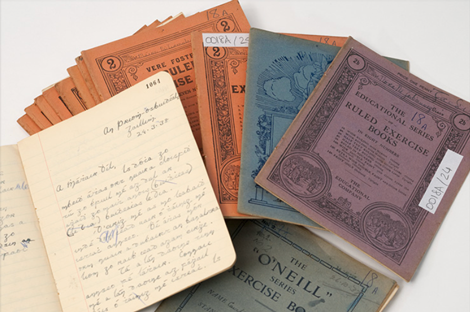
Miotas draws inspiration from an initiative called the "School Collection," launched in the 1930s by the Irish Department of Education, in which schoolchildren recorded stories, songs, and everyday domestic practices—such as cooking, fishing, playing, and crafting—in notebooks.
School collection
Miotas draws inspiration from an initiative launched by the Irish Department of Education in the 1930s, known as the "School Collection." The program tasked teachers in Irish schools with distributing notebooks to 12-year-old children, instructing them to write about stories, songs, and daily domestic practices—such as cooking, fishing, playing, crafting, and decorating. Guided by their teachers, the children interviewed their parents, grandparents, aunts, and uncles, resulting in 40,000 notebooks that are now accessible online, thanks to the efforts of the organization Dúchas.
Following an initial research trip to the Aran Islands in 2025—retracing the steps of Robert Flaherty, the founder of "ethnofiction" (a discipline later developed by the French anthropologist Jean Rouch)—Behar and Xiradakis learned of the School Collection project. Deeply interested in ancient ecologies and local narratives—which they view as a source of inspiration for addressing contemporary environmental challenges—the duo decided to "re-enact" the School Collection project with children today, focusing specifically on the Aran Islands. The islanders, having been isolated for years, had developed methods of production that allowed them to live in complete self-sufficiency—encompassing everything from the creation of clothing and food to the development of modes of transport.
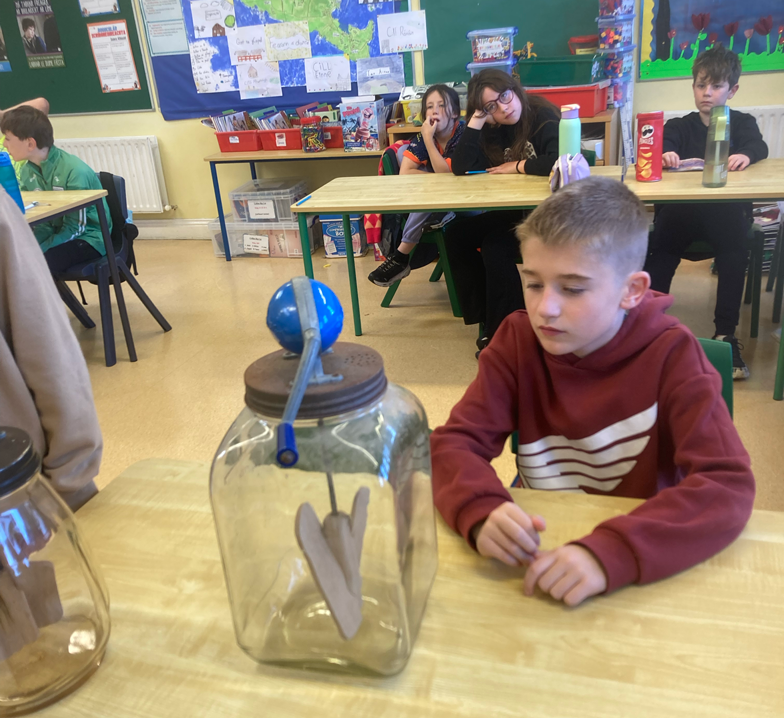
In 2026, on the island of Inishmore, Behar and Xiradakis invited 12-year-old students from Scoil Rónáin to work with their parents and grandparents to locate the everyday objects mentioned or depicted in the texts, drawings, and photographs found within the original School Collection. This collection of objects led to a workshop where children could present their items and begin drafting texts, working in collaboration with their teachers and parents.
The next step, in partnership with local organizations, will be to design new objects inspired by the uses, practices, and materials gathered—envisioning new functions that could foster alternative, localized methods of production.
By situating this project within a historical continuum, Miotas invites children to reconnect with an environment that has since vanished, thereby addressing "ecological amnesia"—a concept introduced in 1995 by biologist Daniel Pauly through the notion of a "shifting baseline." This syndrome—the fundamental scientific mechanism behind ecological amnesia—describes how our perception of what is "normal" in the natural world degrades from one generation to the next.